
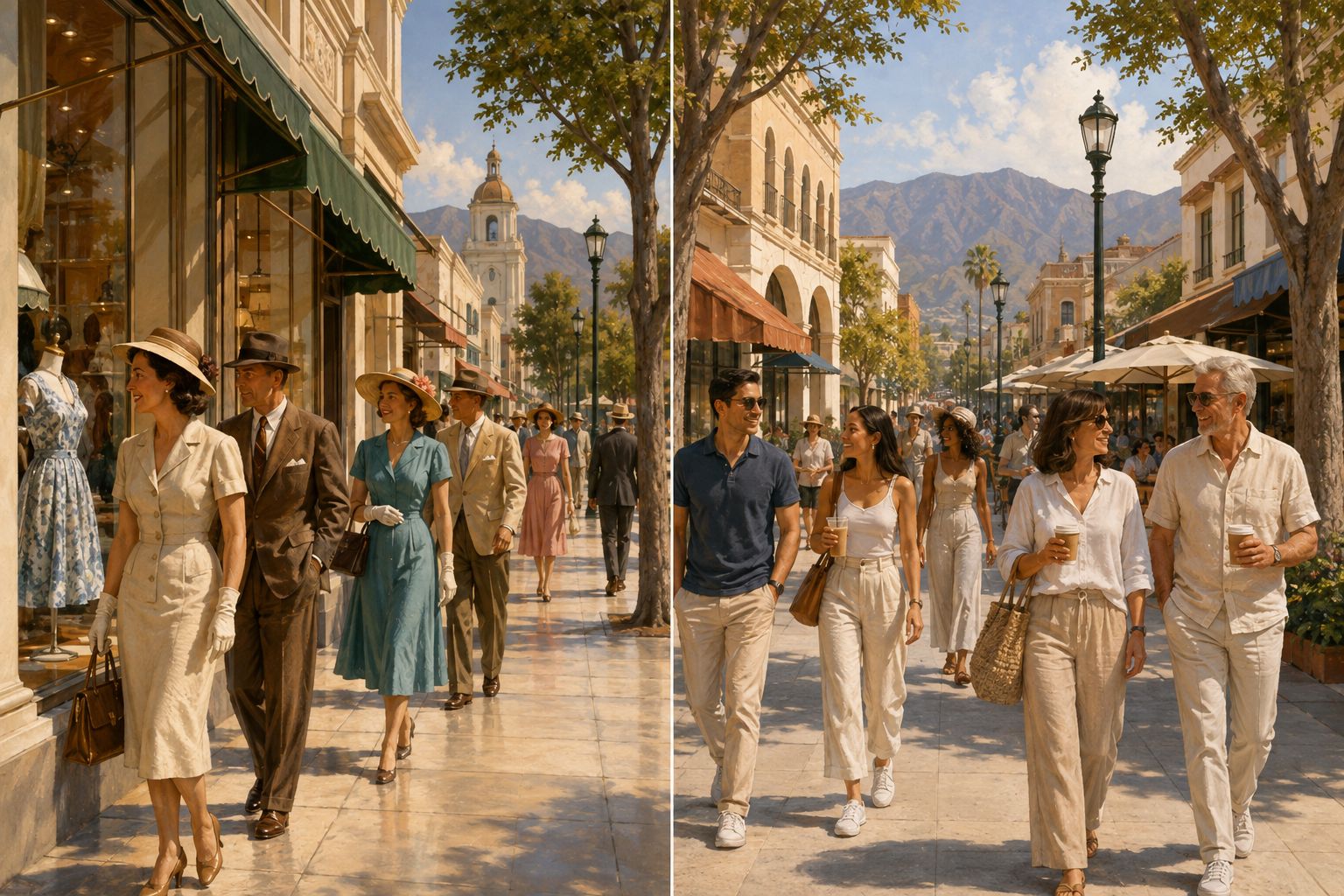
California casual dress – Dominic grew up near a teachers’ college in Connecticut. He remembers noticing that college students preparing to enter one of society’s most visible professions were beginning to dress much more casually than the teachers he knew. Even then, he wondered whether something larger was changing—not only in clothing, but in the way people presented themselves to one another.
I met Dominic years later here in Pasadena, where California casual dress already felt perfectly natural. Since then, the two of us have often noticed the contrast when watching classic films. People dressed to board a train, enter a restaurant, attend the theater, or spend an afternoon shopping. A hat, jacket or carefully chosen dress did more than satisfy a rule. It helped turn an ordinary outing into an occasion.
Those scenes now feel like glimpses of another civilization. We have gained ease, freedom and comfort. But did we also lose some of the pleasure that came from preparing for where we were going? And did California help lead us there?
How California casual dress became a way of life
Living in Southern California, we can understand why casual dress took hold so powerfully here. Our days move easily between the car, a patio, a shop, a walk and dinner. The climate rarely insists on heavy clothing, and the California ideal has always suggested movement, sunshine and a life lived partly outdoors.
California did not invent casual clothing. American sportswear was already developing before World War II, and wartime life made practical clothing more common. But California made relaxation look attractive. Hollywood carried the image everywhere, and casual dressing came to suggest not that one had given up, but that one belonged to a newer, freer world.
Dominic’s memory of the Connecticut college students now seems like one small scene in that larger change. The students were not simply choosing different clothes from their teachers. They were beginning to express a different idea of authority—less formal, less distant, and perhaps more eager to appear like everyone else.
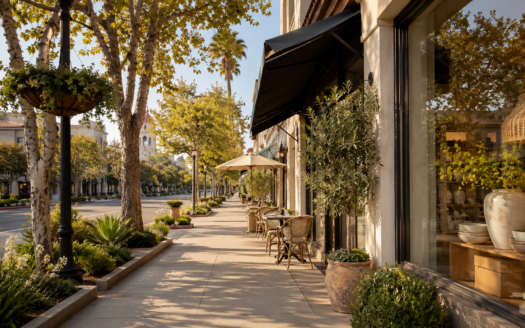
South Lake Avenue dressed for the occasion
We often think about this on South Lake Avenue. When Bullock’s Pasadena opened there in 1947, shopping became an event. The building was designed to feel like an exclusive home or country club, and it helped turn South Lake into one of the San Gabriel Valley’s most fashionable destinations. Nearby, I. Magnin added to the sense that clothing, architecture, service, and social life all belonged to the same outing.
South Lake remains one of the places we enjoy in Pasadena, but we notice how differently it functions now. A single visit might include a fitness class, an errand, coffee, shopping, and dinner. Restaurants and stores share the avenue with salons, wellness businesses, and everyday services, and people move easily among all of them without changing how they are dressed.
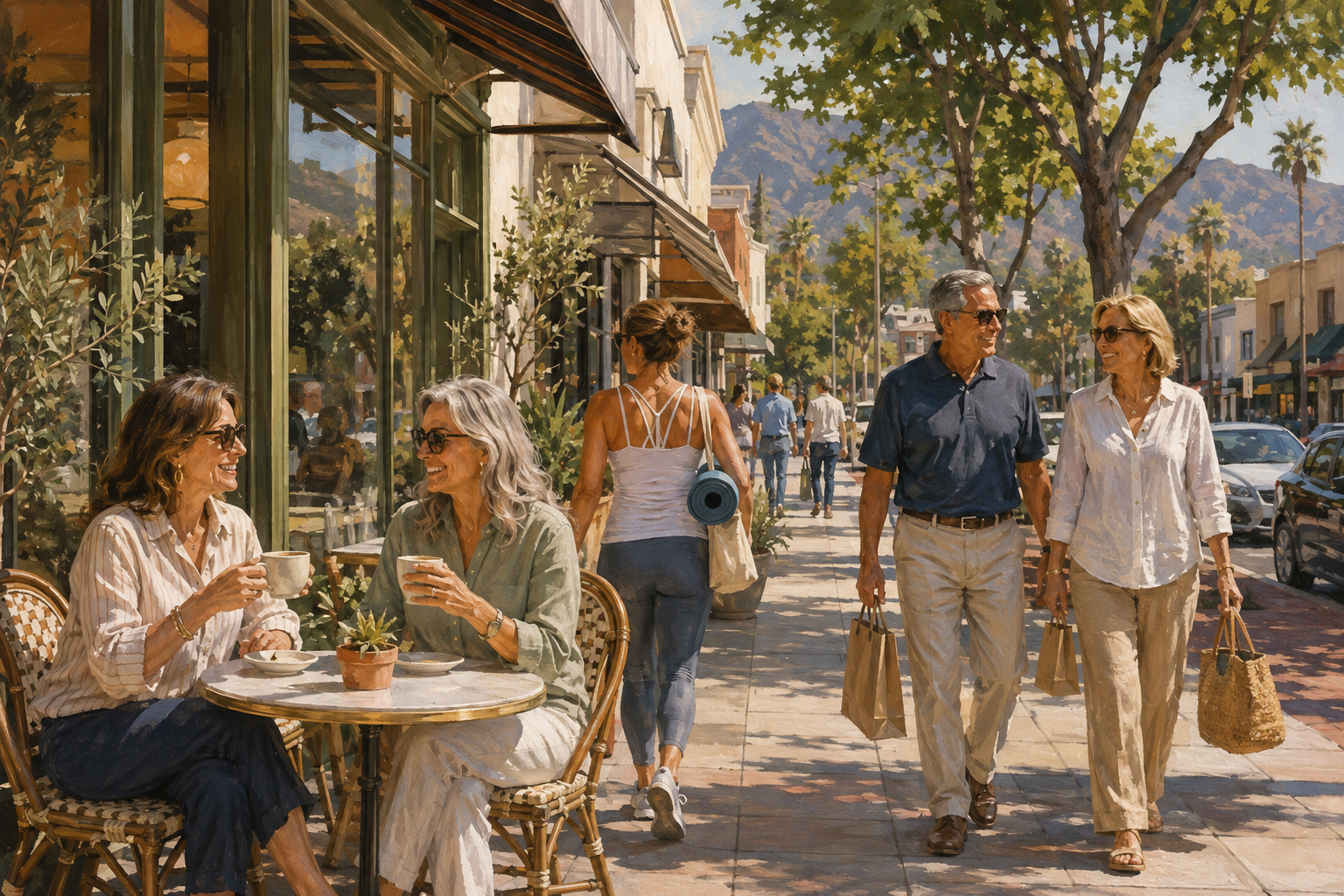
We are part of that change ourselves, and California casual dress suits much of our daily life. We appreciate being able to stop for lunch without planning what to wear, and we certainly do not dress formally every time we go out. Yet when even an elegant restaurant calls for nothing more than “smart casual,” we sometimes wonder whether the old dress code merely relaxed—or quietly vanished.
What did we gain—and what slipped away?
We would not willingly surrender what California casual dress has given us. We like clothing that is comfortable and easy to live in. We like that people can enter a good restaurant, a theater, or a beautiful public space without worrying they don’t have the “right” wardrobe. That freedom feels especially natural here, and it is worth keeping.
But we know that getting dressed can change the experience. When we choose something special for dinner or the theater, the evening begins before we leave home. The small decisions—a jacket, a dress, polished shoes, a favorite piece of jewelry—create anticipation. We are no longer merely finishing one part of the day and moving into the next; we are going somewhere.
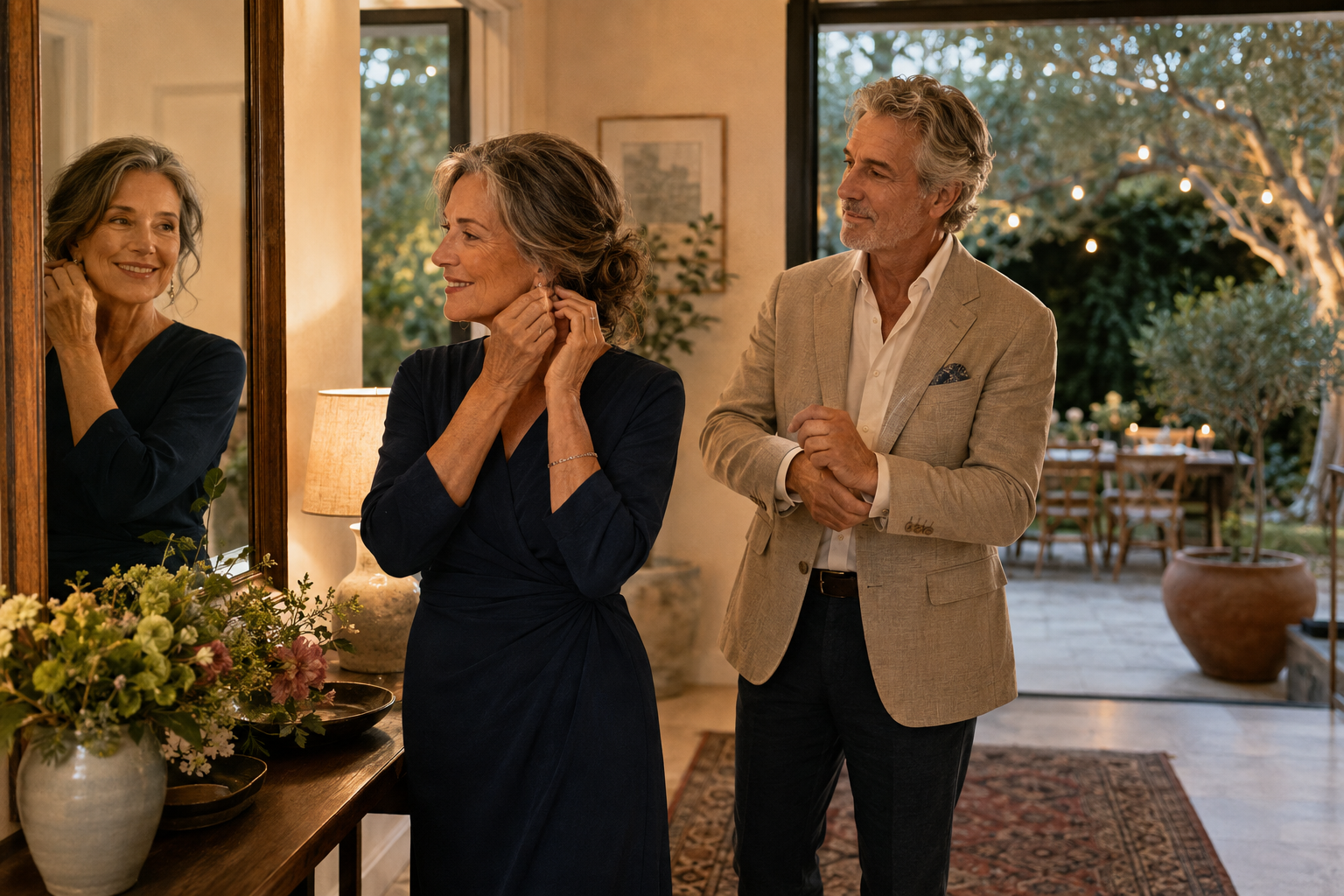
We notice the opposite, too. If the same clothes take us from walking the dog to errands, dinner, and a performance, the day is wonderfully easy—but the occasions can blur together. Dressing up alters how we feel and how we carry ourselves. It is not only about being seen. For us, it can be a way of saying that this moment, this place, and the people sharing it deserve a little extra attention.
We do not want gloves, hats and suits to return as requirements. We simply hope California casual dress can leave room for a little ceremony. California casual dress helped show the world that relaxed clothing could be attractive, expressive, and modern. Perhaps we can keep that freedom while still remembering that, sometimes, the pleasure of going out begins with deciding what to wear.
California casual changed our homes, too
The preference for ease that helped popularize California casual dress also echoes in the homes we know and sell. Formal parlors and dining rooms gradually gave way to family rooms, open kitchens, patios, and the indoor-outdoor living that feels so distinctly Californian. Buyers today often respond most strongly to homes that feel comfortable in everyday life—places where people can cook, gather, work and relax without ceremony.
Yet the homes that stay with us usually offer both ease and a sense of occasion. It may be a gracious entry, a dining room that makes a holiday feel special, a garden arranged for evening guests, or one beautiful room that invites us to pause. Just as with clothing, comfort doesn’t have to mean every experience feels the same.
That balance matters whether you are choosing a home or preparing one for the market. If you are considering a move in Greater Pasadena, we would be delighted to help you recognize—and present—the qualities that make a home work beautifully for daily life while still feeling special when it matters.
And we would still love to hear from you: What do you remember about dressing for shopping, dinner, travel or the theater—and do you miss any part of it?