

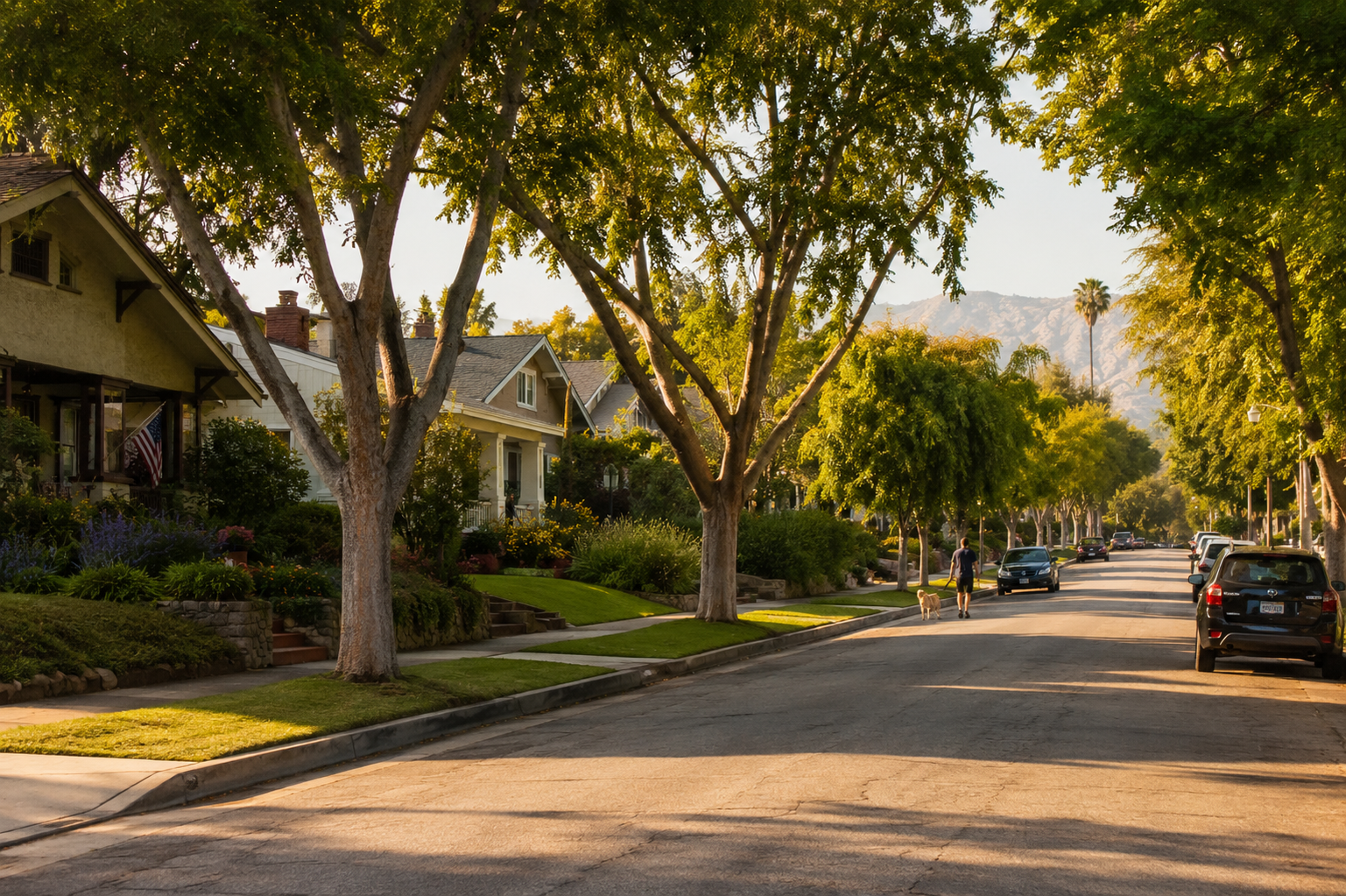
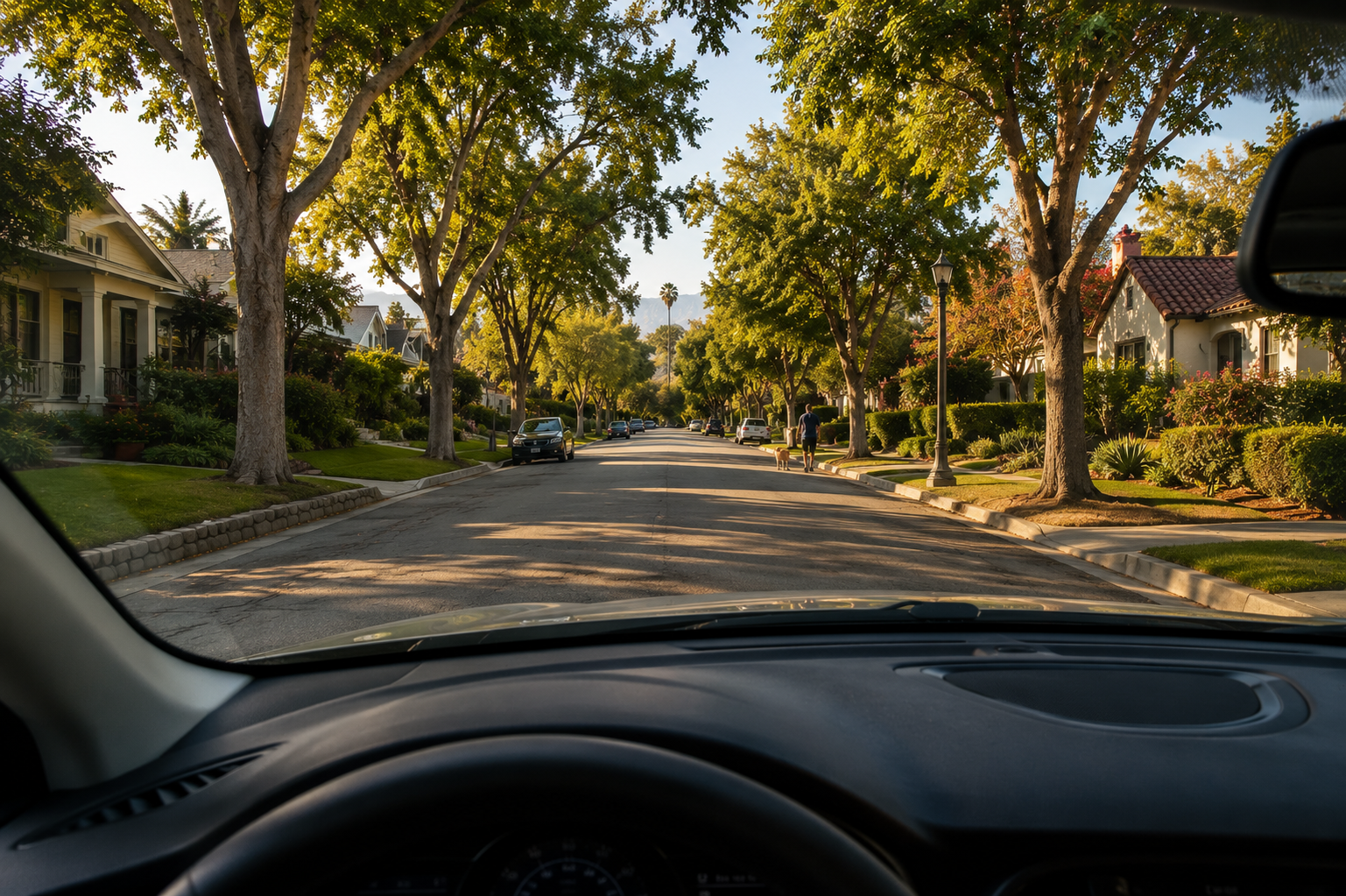
They arrived ten minutes early. The buyers parked a few houses away and began talking about the property. They had studied the photographs, compared the room sizes, and decided the kitchen might eventually need updating.
Then their attention moved outside the car. A woman walked past with an elderly golden retriever setting the pace. Across the street, a man rolled two trash cans toward the side of his house, stopping to speak with someone working in a front garden. A bicycle rested on a lawn. Two packages waited beside a neighbor’s front door.
Nothing especially important seemed to be happening. But before the agent arrived, the street character had already begun shaping how the buyers felt about the house.
A HOME RARELY INTRODUCES ITSELF ALONE.
Online, a property appears as a carefully framed collection of rooms. There is the bright kitchen, the inviting living room, the primary bedroom, and the garden photographed when the light is just right.
In person, that frame disappears. Buyers encounter the width of the road, the sound of traffic, the shade from the trees, the distance between homes, and the movement of people through the neighborhood. Together, those details create the street character, even when no one consciously names it.
A quiet block with deep setbacks offers a different experience from a street where neighbors, walkers, and children regularly cross paths. Neither is automatically better. Each provides a different setting for the house.
THE HOUSE WAS NOT QUITE PERFECT.
Inside, the buyers found much of what they hoped to find. The living room had good light. The backyard was smaller than expected, but private. One bedroom would need to be converted into an office, and the kitchen was not as open as the photographs had suggested.
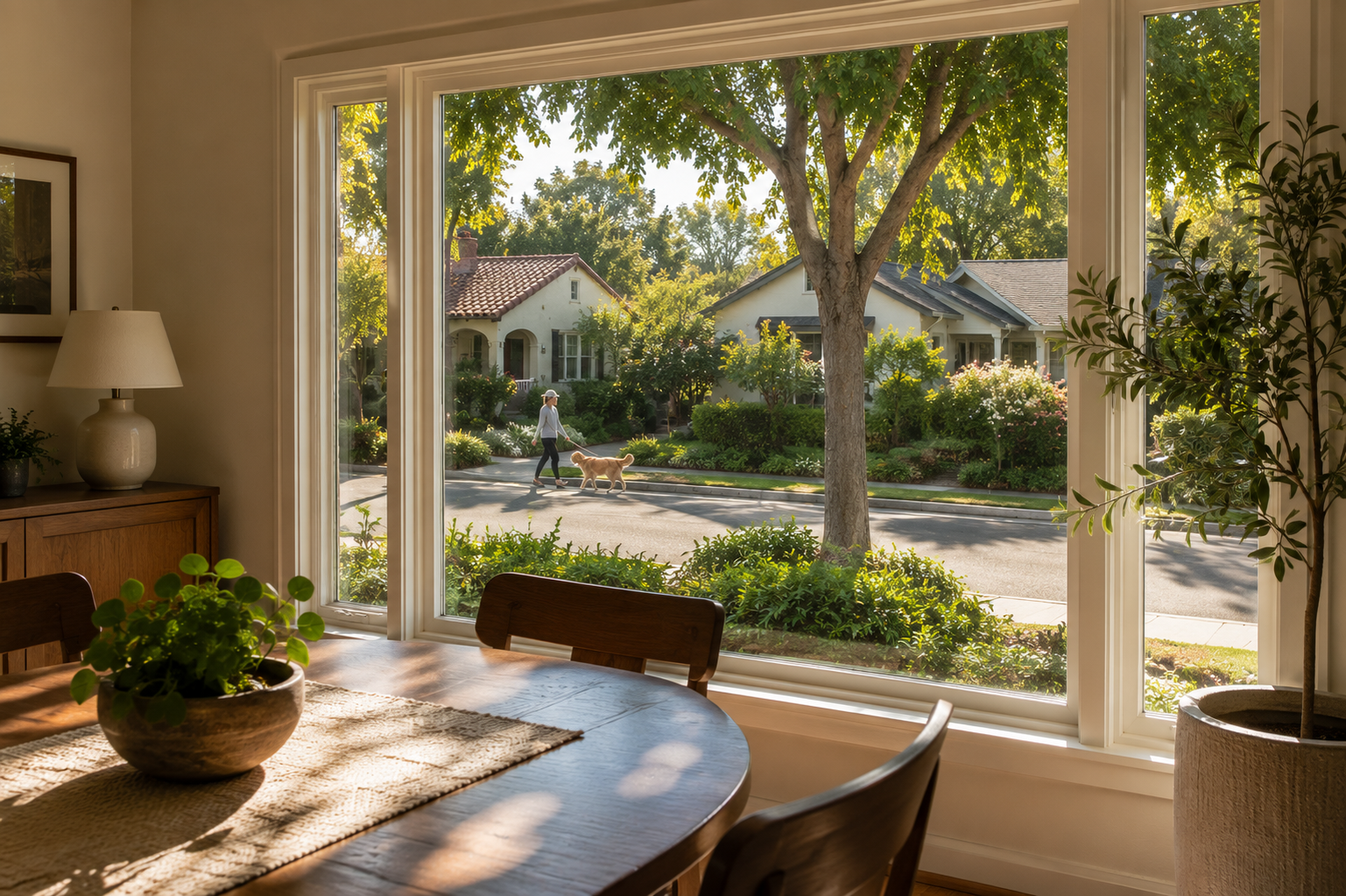
They walked through once, then circled back. In the dining room, they stopped and looked through the front window. The woman and her golden retriever were now making their way home on the opposite side of the street.
The buyers began talking less about renovations and more about ordinary life. Where would they walk after dinner? Would they use the front porch? Could visiting family park nearby? Was the block always this calm in the afternoon?
Those questions were not really about countertops or square footage. They were questions about the street’s character and whether the block’s daily rhythm felt right.
A FEW BLOCKS CAN CHANGE EVERYTHING.
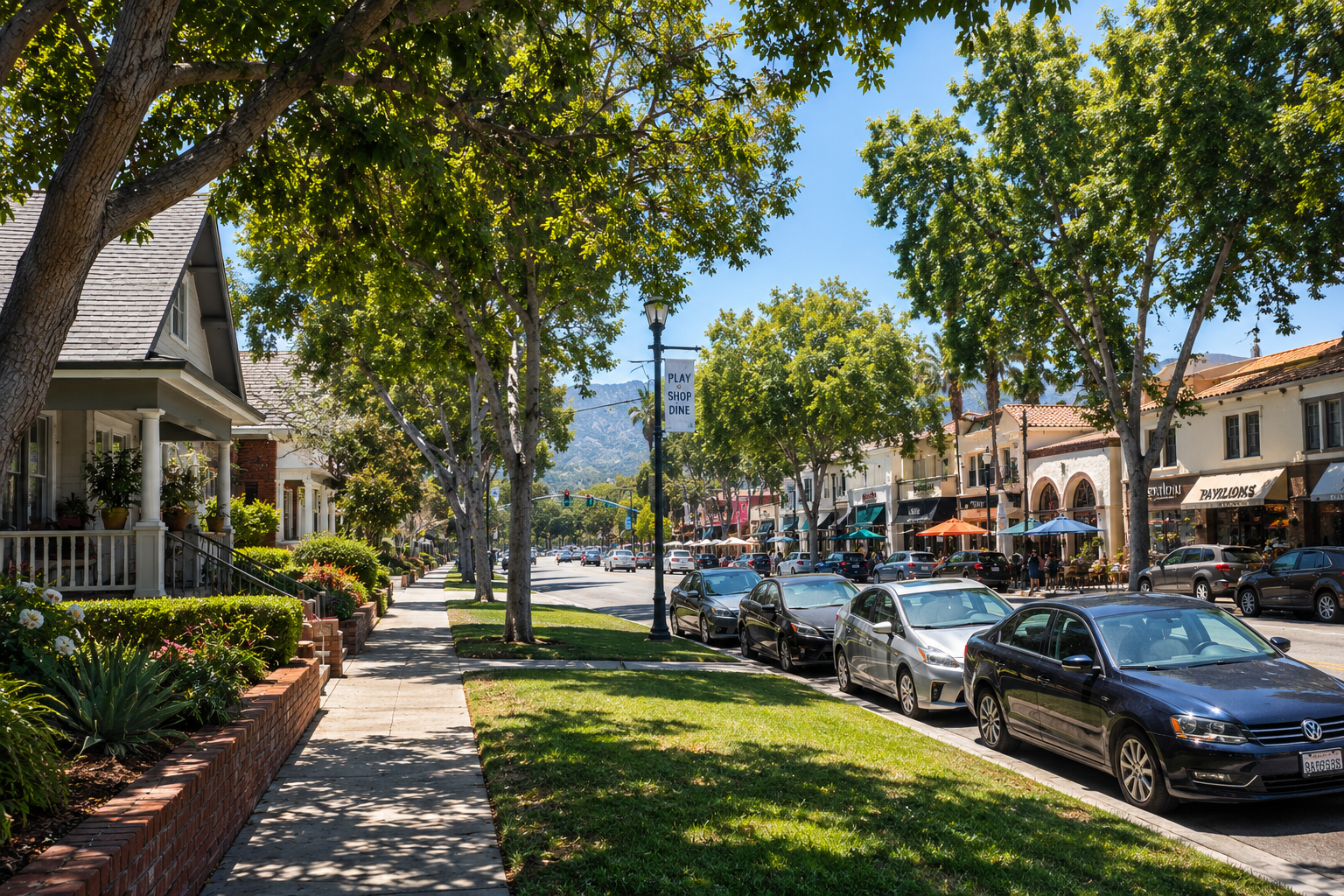
Greater Pasadena is made up of recognizable communities, but the feeling within them is rarely uniform. Two homes in the same city, ZIP code, or even neighborhood can have very different surroundings.
A Greater Pasadena neighborhood guide can help someone begin exploring an area, but the individual block still needs to be experienced in person.
One street may be leafy and secluded. Another may feel more connected to schools, parks, restaurants, or the local shopping streets of Greater Pasadena.
A walkability score can measure the distance to nearby places. It cannot show whether neighbors pause at the curb to talk, whether dog walkers appear every evening, or whether the block settles into silence at dusk.
That is why street character can become the missing explanation when a buyer responds strongly to one home and feels unexpectedly uncertain about another nearby.
THE RESIDENTS ALREADY KNOW THE STORY.
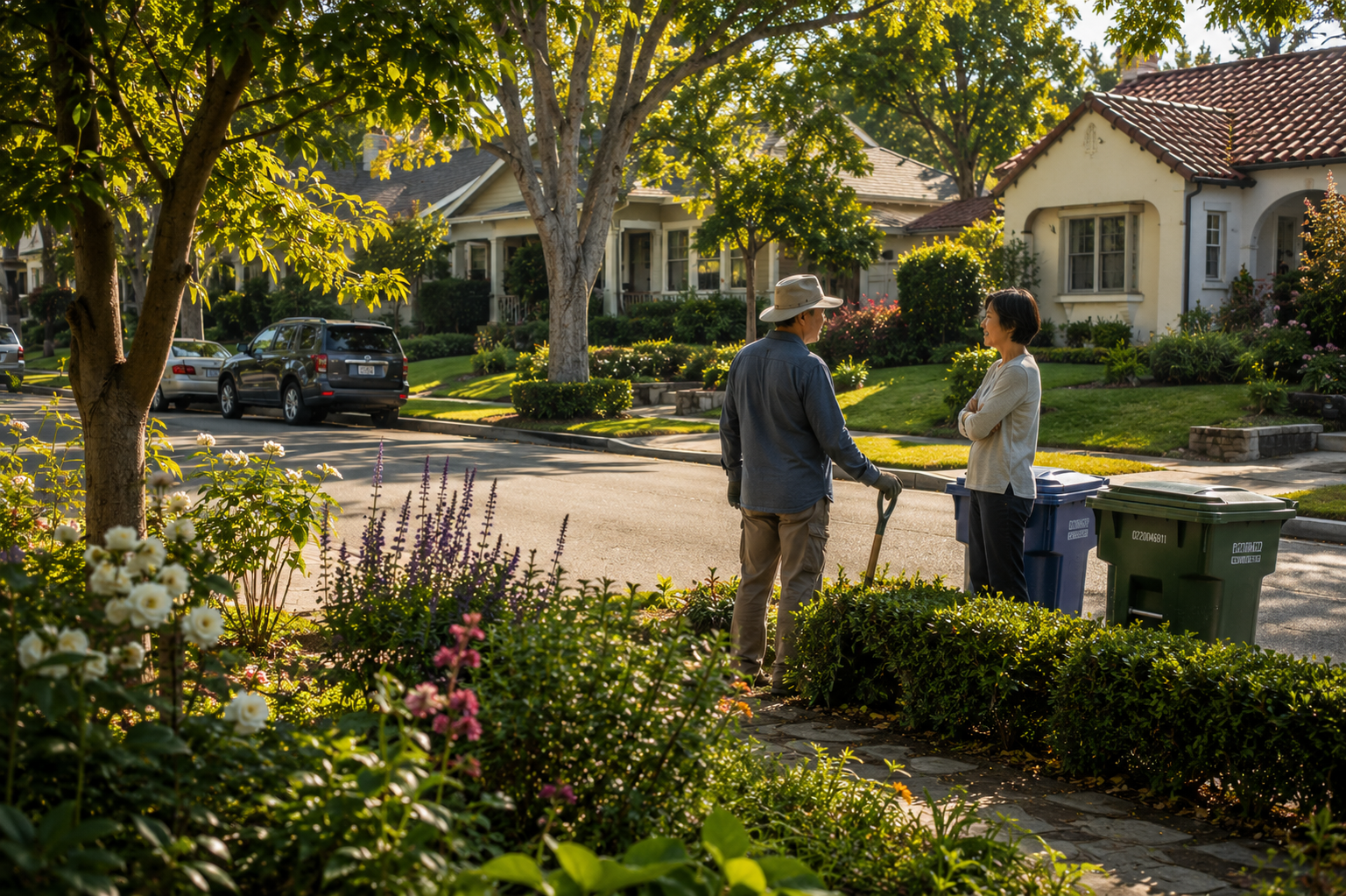
The people who live on a block know its rhythms better than anyone. They know who walks early in the morning, whether neighbors chat over fences, and how the street changes on weekends. They know which season fills the trees with blossoms. They know whether Halloween brings twenty trick-or-treaters or two hundred.
“Three bedrooms, two baths, updated systems, tree-lined street” may all be accurate. But those words do not explain what the block feels like when neighbors begin appearing outside on a Saturday morning.
Residents understand the street character because they experience it rather than advertise it. Ask someone who lives there to describe the street, and the answer may be more revealing than the property description:
“It is quiet, but people still know one another.”
“Everyone seems to walk their dogs around six.”
“There are always children outside after school.”
“People are friendly, but nobody is in your business.”
Those are small observations, but they describe a way of living.
THE DECISION BEGAN BEFORE THE SHOWING.
The buyers eventually stepped back outside and talked through the compromises. The kitchen would need work. The office arrangement was not ideal. The backyard might require some creative planning. Still, neither seemed ready to leave.
One of them looked down the block and said, almost as an aside, “I can picture us here.”
The street character had not erased the home’s imperfections. It had placed them within a larger picture. The buyers were no longer evaluating only a house.
They were imagining returning to it, walking away from it, greeting people nearby, and becoming part of the ordinary life they had watched while waiting in the car. The street had helped the home make sense.
WHAT THE LISTING COULD NOT SAY.
A listing can describe architectural details, improvements, schools, transportation, and nearby places. It can show how the rooms connect and where the sunlight enters. But it cannot fully explain the life unfolding around the house. That story begins at the curb.
Sometimes buyers sense it while looking for the address. Sometimes they notice it through the front window. Sometimes it becomes clear only after they drive away and compare the feeling with the other homes they have seen.
The house may be why they scheduled the appointment. The street character may be why they remember it.
For a seller, understanding that distinction can influence how the property is presented and which parts of its setting deserve more attention.
For a buyer, it can help separate the excitement of a beautiful house from the more lasting question of whether the location fits the life they want to live.
WHY TALK WITH HEM-YOUNG?
Hem-young brings more than a general familiarity with the area. Over the course of nearly 700 home sales, she has helped buyers and sellers work through changing markets, different neighborhoods, difficult decisions, and properties that do not always fit neatly into an online description.
That experience has taught her to notice what buyers respond to, what they hesitate over, and which details can quietly influence a decision.
For sellers, Hem-young can help identify how the home, the block, and the surrounding neighborhood work together. She can then use that understanding when advising on preparation, pricing, positioning, and marketing.
For buyers, she can help distinguish between a house that photographs beautifully and a location that genuinely fits their routines, priorities, and plans.
Her decades of experience and street-level knowledge of Greater Pasadena are especially valuable before a decision becomes urgent, while there is still time to observe, compare, and plan carefully.
If you are thinking about selling, buying, or simply wondering how buyers might experience your home and its surroundings, call or text Hem-young at 626-825-5599 or email h.defazio@compass.com.
The listing provides the facts. The house provides the rooms. The street character provides the setting. And sometimes the street knows before the listing does.