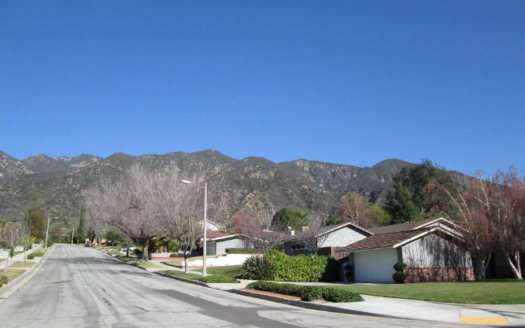


West San Rafael hillside living. Some Pasadena neighborhoods introduce themselves immediately. West San Rafael – the hills and winding streets west of San Rafael Avenue – takes a little longer.
Its wooded slopes and houses tucked into the terrain can feel far removed from the city. Yet Old Pasadena, South Pasadena, Highland Park, and the routes into Los Angeles are close by. That combination – privacy without isolation – is one reason buyers continue to seek it out.
We have known West San Rafael since the early years of our real estate careers, but the neighborhood’s story began long before homes climbed its hillsides.
A Lake, a Winery and a Road to Los Angeles
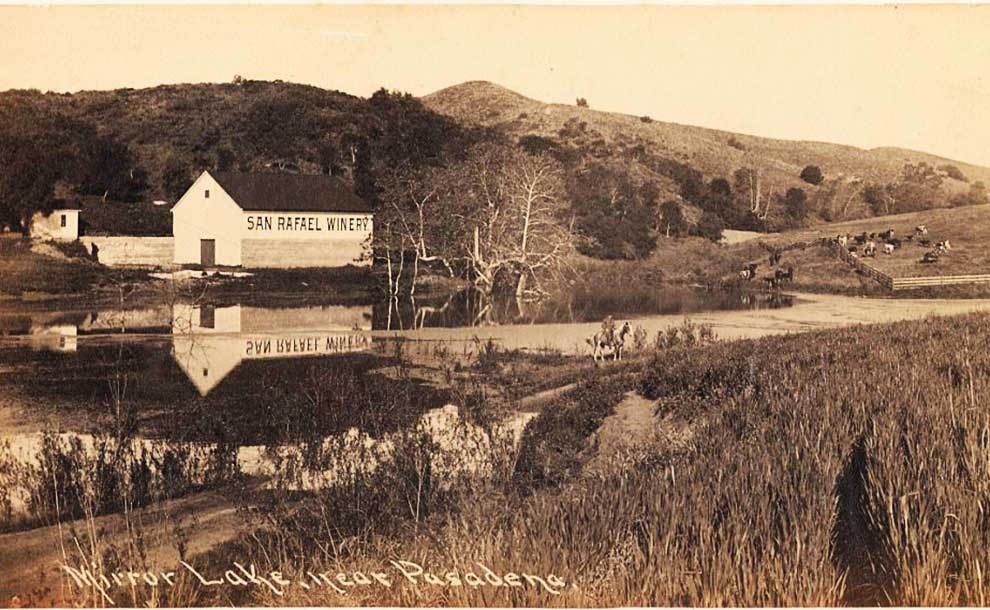
Credit: Courtesy of Pasadena Museum of History, as reproduced by Colorado Boulevard. Source: https://www.coloradoboulevard.net/exploring-pasadenas-johnston-lake/
Johnston Lake began as a spring-fed, marshy area surrounded by open land. In 1875, former Los Angeles mayor Prudent Beaudry established the San Rafael Winery beside it.
To create a more direct route for moving goods between the winery and Los Angeles, Beaudry excavated a tunnel through the hillside. They used the soil removed during the work to form an earthen dam, quadrupling the lake’s size and providing water for the winery.
The Campbell-Johnston family later acquired the property, maintained vineyards, and leased surrounding land for livestock grazing. Johnston Lake eventually became a local recreation spot for fishing, swimming, boating, and picnics.
Today, the lake is hidden within a private residential enclave. Buyers can drive through West San Rafael without realizing it exists. Nevertheless, that early landscape still helps explain the neighborhood’s irregular roads, mature trees, and homes fitted individually into the terrain.
West San Rafael does not feel as if it came from one development plan – and that is a large part of its charm.
Remnants of an Earlier Neighborhood
The Church of the Angels on Avenue 64 is another beautiful reminder of West San Rafael’s beginnings.
Built in 1889 as a memorial to Alexander Campbell-Johnston, the Gothic Revival stone chapel was modeled after an English country church. Its intimate scale and wooded grounds seem wonderfully unexpected in Southern California.
Places like this give West San Rafael hillside living an identity beyond its houses. Buyers are not simply choosing a property. They are entering a neighborhood where pieces of Pasadena’s earlier landscape remain part of everyday life.
The hills themselves tell a later chapter.
In 1924, William Carr purchased and subdivided Poppy Peak. His son, John Carr, became a respected local real estate professional – and the seasoned agent with whom Dominic completed his first real estate transaction as a greenhorn. I still remember pulling out my real estate license at the escrow office—completely unnecessary, though I didn’t know it then—and, rather than embarrass me, John quietly presented his license too while the escrow officer graciously played along.
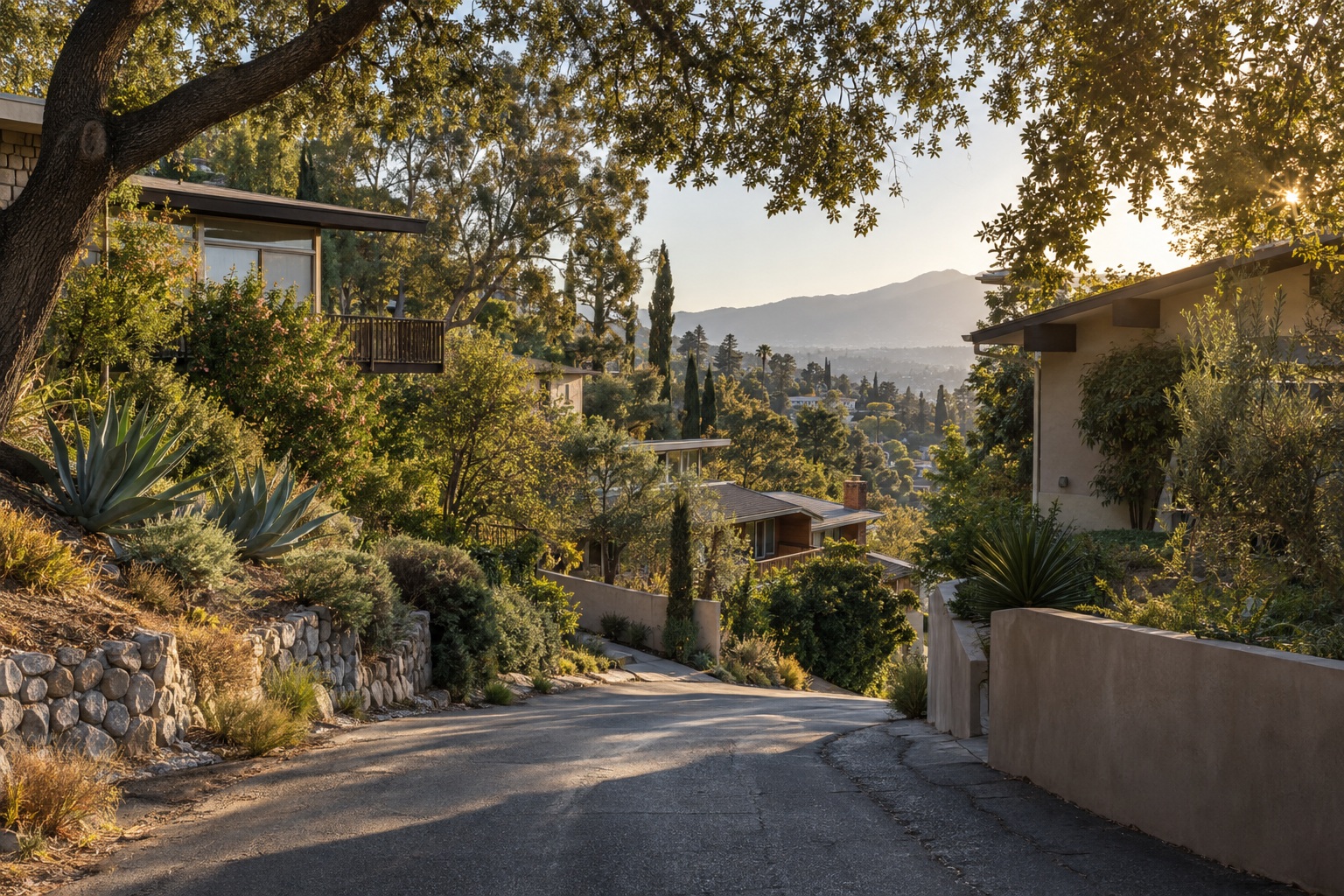
Over the following decades, architects including Richard Neutra, Harwell Hamilton Harris and members of the influential USC school of architecture designed homes on Poppy Peak. The resulting collection of Modernist houses became nationally recognized when the Poppy Peak Historic District was placed on the National Register of Historic Places in 2009.
We Learned West San Rafael Hillside Living Door by Door
During Dominic’s first several years in real estate, he knocked on doors throughout these hills. We worked side by side, meeting owners, hearing their stories, and learning about houses that public records alone could never explain.
Some of our first listings came from West San Rafael. Those years taught us the streets, the homes, and the people, and that experience became part of our business foundation.
Door-knocking was not glamorous, but it taught us to pay attention. West San Rafael hillside living means even nearby streets can differ greatly in access, sunlight, privacy, terrain, and outlook. One buyer may gladly exchange a level yard for a dramatic view. Another may admire a hillside house but prefer fewer stairs or easier access.
The neighborhood rewards buyers who look beyond bedroom counts and square footage. Its homes may be early character residences, Midcentury Modern designs, secluded estates, or highly individual hillside houses. The right choice depends on how the house, its site and its street fit the buyer’s life.
When we help buyers here, we draw upon what we learned during those early years and everything we have learned since. We help buyers recognize what is distinctive, understand the practical tradeoffs, and avoid judging an unusual property by an inappropriate comparison.
Selling the Difference
The same knowledge matters when we represent a West San Rafael seller.
A house here should not be marketed as though it were interchangeable with the one around the corner. We evaluate architecture, outlook, setting, access, and the relationship between the home and its hillside, all of which can influence its appeal and value.
Our work is to identify those differences, anticipate buyers’ questions, and build the marketing around the property’s genuine strengths. We want prospective buyers to understand not only the house, but also why living in this particular part of West San Rafael may suit them.
We have watched West San Rafael evolve from the neighborhood we first canvassed into one of Greater Pasadena’s most individual places to live. Its hidden lake, old winery, landmark church, and remarkable hillside architecture are not disconnected pieces of history. Together, they explain why the neighborhood feels unlike anywhere else.
If you are considering West San Rafael hillside living, we can help you find the part of the hills – and the particular home – that fits you. If you already own here, we can help buyers understand why your home and its setting deserve special consideration.