
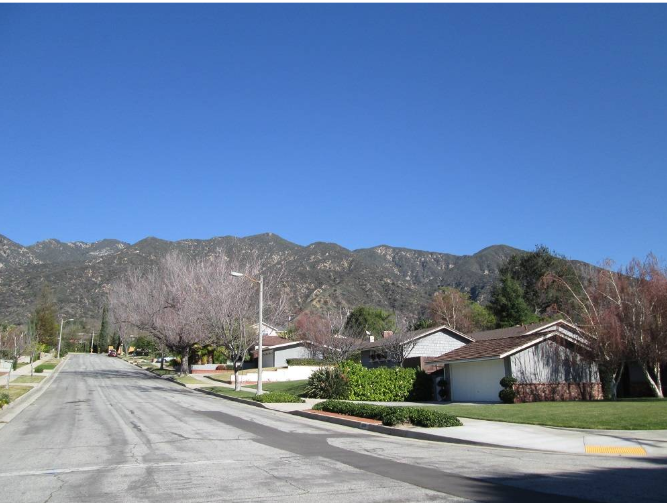
When I drive through Hastings Ranch, I notice quieter streets, mountain views, and comfortably scaled postwar homes. Generations of residents have given the neighborhood its own personality.
As a Realtor, I see buyers respond before they know the Hastings Ranch history. They notice usable yards, predominantly single-story homes, and a comfortable relationship between houses and lots.
That made me curious: How did Hastings Ranch become the neighborhood we recognize today?
Before the Neighborhood, a Remarkable Ranch
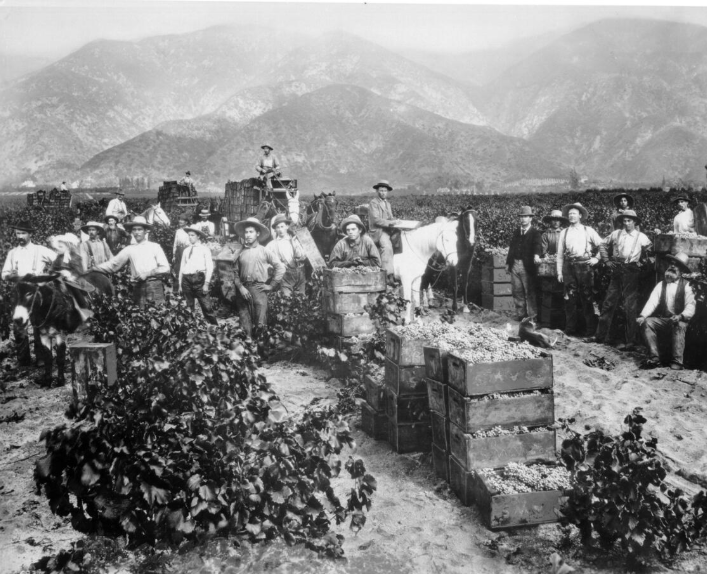
In 1882, Charles Cook Hastings purchased approximately 1,100 acres between Pasadena and Sierra Madre for $7 an acre. He called it Mesa Alta Rancho, planted grapevines, and built a mansion.
Grape pickers on Hastings Ranch near Pasadena, circa 1898.
His son, Charles Houston Hastings, later took charge. Here, Hastings Ranch history becomes unexpectedly lively: the property reportedly included unusual plants, peacocks, pheasants, champion horses, and 32 collies.
That image seems far removed from today’s neighborhood, yet the mountain backdrop remains part of its appeal.
What Hastings Ranch Almost Became
Hastings Ranch might easily have developed a very different identity. In 1919, it was considered a possible location for the southern campus of the University of California, which eventually became UCLA.
Part of the area later became the Sierra Airdrome, where Amelia Earhart reportedly participated in a 1924 air rodeo. The airfield closed in 1929.
From Ranch to Development
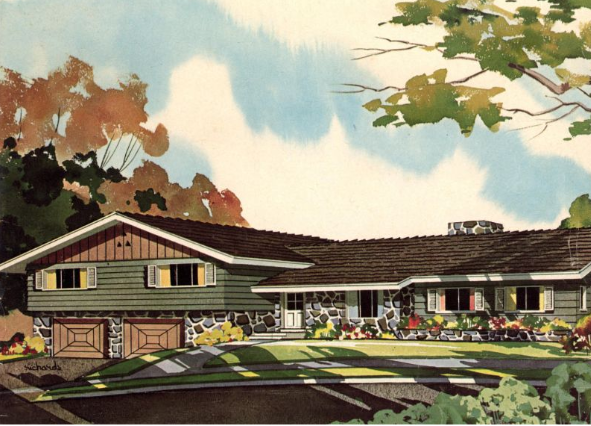
After the Hastings mansion burned in 1928 and the Sierra Airdrome closed the following year, the ranch gradually fell into disrepair. Following Charles Houston Hastings’s death in 1942, the property was sold to a development syndicate for more than $1 million.
Portions were annexed into Pasadena beginning in 1946, and by 1948 the first homes were appearing in Lower Hastings Ranch. This marked the decisive turn in Hastings Ranch history from private estate to residential community.
A Neighborhood Appears Almost Overnight
By 1951, newspaper advertisements were inviting prospective buyers to drive to Sierra Madre Boulevard and Michillinda Avenue to tour the new Coronet Homes. Instead of vineyards and open ranchland, visitors encountered model homes, newly paved streets, sidewalks, sewers and streetlights—all presented as part of a modern, ready-made community.
Architect Edward H. Fickett added variety through changing rooflines, floor plans, and streets that followed the terrain. Approximately 1,800 homes were completed in phases across Lower, Middle and Upper Hastings Ranch.
Hundreds of households arrived within a remarkably short period. They were not simply moving into an established neighborhood; together, those first residents were creating one. When I show homes in Hastings Ranch today, I can still see the framework those planners and residents established.
The Timing Helped Shape the Homes
Hastings Ranch emerged as a residential community when Pasadena needed homes for families arriving after World War II.
The houses offered practical floor plans, attached garages, private yards and an easy indoor-outdoor connection—qualities buyers still value. This is where Hastings Ranch history remains especially relevant. Buyers may not be shopping for “history,” but they recognize its results in the neighborhood’s consistency and human scale.
Residents Made It More Than a Housing Tract
A developer can build houses, but residents create a neighborhood. The Hastings Branch Library opened in 1959 as a community anchor.
The holiday tradition began in Upper Hastings Ranch in 1951, when several families reportedly placed luminaria along their driveways to help guide Santa Claus. It soon grew into coordinated block displays, with participating streets developing their own parkway themes.
Lower Hastings Ranch residents also joined in seasonal decorating, helping make the larger area part of Pasadena’s holiday landscape, although the organized neighborhood-wide “Holiday Light Up” remained an Upper Hastings Ranch tradition.
To me, this part of Hastings Ranch history reveals something important: the neighborhood’s identity comes not only from its homes, but from neighbors choosing to create traditions together.
What Buyers Still Find Today
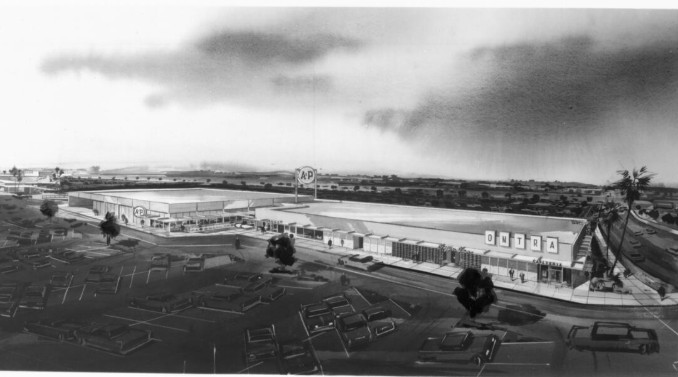
Hastings Ranch Plaza and nearby centers along Foothill and Rosemead boulevards offer shopping, services, and casual dining minutes away.
Residents are also close to Eaton Canyon, Eaton Canyon Golf Course, the Los Angeles County Arboretum, Sierra Madre and the Metro A Line.
Homes have evolved with each generation, but the street scale, mountain views, and established feel still matter. Hastings Ranch’s history is still visible in how the neighborhood looks and lives.
Could Hastings Ranch Feel Like Home to You?
My research into Hastings Ranch history helped me understand that no single developer or generation created its identity. It accumulated over time—and still does.
History explains part of the appeal, but the best way to understand the neighborhood is to see how its homes and surroundings fit the way you want to live.
Use our Find My Home search to explore Hastings Ranch and communities throughout Greater Pasadena by location, price, home size, and the features that matter most to you.
If you would like to compare Hastings Ranch with Sierra Madre, Bungalow Heaven or another Pasadena neighborhood, contact me. I would be happy to help you understand the differences.