

So you want to build an Acessory Dwelling Unit (ADU) in California? Here’s what you need to know.
TABLE OF CONTENTS
Contents
Maybe you’re itching to own a rental unit for the extra monthly income. Maybe you want to have space nearby for your parents to live in when they’re older, or for your kid after graduation. Maybe you’re thinking about all of the above. For whatever reason, thousands of California homeowners are adding accessory dwelling units to their property. These homes can be built for a fraction of the cost of a new house, mainly because they’re small and can be installed inside an existing house or garage.
The gates have been opened by the state and some local governments, which see ADUs as part of the solution to California’s housing crisis. Laws passed over the last five years have made it considerably easier to obtain permits while slashing local fees. Nevertheless, there are still plenty of hurdles to overcome, even in Los Angeles and other cities where officials have welcomed ADUs. The projects are expensive, the rules can be complex, and the bureaucratic hurdles can be dauntingly high. To help you understand what’s involved in building an ADU, The Times interviewed city officials, builders, academics, and other experts about the process. Here are their insights.
What is an ADU?

More than just a spare bedroom you might rent out, an ADU is an independent living space that provides for all the basic needs. Or, as state law puts it, an ADU must have “permanent provisions for living, sleeping, eating, cooking, and sanitation.” That means its own entrance, living area, kitchen, and bathroom. ADUs can be attached, meaning they’re like an addition to your home, or detached, as in a separate structure on your property. You can create one by building something new or by converting an existing structure, such as your garage. And within your current home, you can create a junior ADU that can share your house’s kitchen and bathrooms.
According to a survey of ADU owners by UC Berkeley, the median construction price in 2020 was $150,000, or about $250 per square foot. That’s not exactly loose change, and construction prices have risen dramatically since then. But you may still be able to cover the loan payments and maintenance costs with the rent you receive from the unit. In other words, these projects can eventually pay for themselves, if you can hold down your construction budget and manage the up-front cost. Those are big ifs, however.
Can I build one?
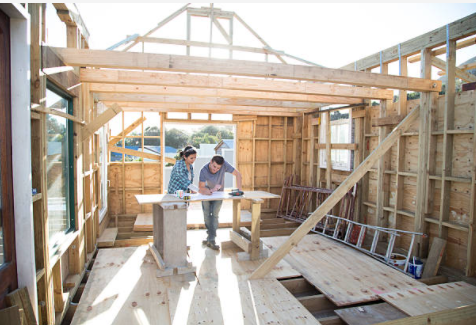
Prior to 2017, the answer may very well have been no. Local governments were often hostile to ADUs, and they used their power over land use and fees to make those dwellings impractical or even impossible. But state law changed on Jan. 1, 2017, granting homeowners in residential zones a limited right to build an ADU. And when some local officials continued to throw obstacles in the path of ADUs, the state enacted more laws to clear the way. Local officials no longer have any discretion over ADU applications — if a project checks all the boxes on a list of objective standards, it has to be approved. Owners of single-family homes can add one ADU and a junior ADU no matter how small the lot is, provided certain conditions are met, even if they don’t live there.
Local governments retain some authority to set objective standards for such things as height limits, setbacks, parking requirements and landscaping, said attorney Elizabeth Hull, a partner at Best Best & Krieger. But if the ADU is no more than 800 square feet and 16 feet high, set back at least 4 feet from the property line, it’s eligible for a permit in any residential or mixed-use zone, Hull said in an email. An ADU also can be built despite prohibitions placed by historic preservation districts or homeowners’ associations, as long as it meets certain conditions. And local officials must act on a completed ADU application within 60 days, or else it’s automatically approved. At least, that’s what the law requires.
This is not to say that you can waltz into City Hall and expect a rubber stamp for your project. The legal changes make building an ADU possible, but “there’s a ton of boxes” to check in order to get a project approved, said Stan Acton, a developer in Campbell, Calif., who specializes in ADUs. Karen Chapple, faculty director of UC Berkeley’s Urban Displacement Project, said excessively demanding building codes remain a barrier to ADUs in some communities. “There is such a difference between the cities that want to make it easy and the cities that want to make it hard,” she said, adding, “If you don’t make it that easy, it starts to become more luxury housing.”
Here’s another important state protection: If you create an ADU by converting an existing garage or other structure that doesn’t comply with local setback rules, your ADU can’t be forced to comply either. Typically, local governments require you to provide off-street parking when you build residential units. And under state law, if you build an ADU with one or more bedrooms, local governments can require you to provide no more than one space, which could be simply an uncovered space in the driveway. And if you turn your garage or carport into an ADU, you don’t have to provide replacement spaces.
Should I build one?

The answer to this question depends on why you want to do it. Acton said that for roughly half of the people who come to his company, building an ADU is a bad idea. “They often have misinformation that they’re basing their decision on,” he said, such as the notion that they can build an ADU in a few weeks for $100,000 and put it right on the property line.“They think they can get an ATM in the backyard, go on vacation, have it done when they get back, start taking money out,” Acton said. “And that’s just not the reality.”
Building an ADU for investment purposes is a viable option for some people. But if that’s your goal, Acton said, you should ask yourself, “Have you looked at other investment options? Have you run the numbers? Is this going to pan out?” An ADU is still a complicated, costly project no matter how small it is, Acton said, because it requires a kitchen, a bathroom, a sewer connection and permits. Added David Lang, a builder in Los Angeles: “The stuff that you don’t see is the most important stuff — the foundation, the plumbing, the electrical, what’s hidden behind the walls.”
If you’re interested only in generating rental income in the short term, Acton said, you could go with a prefab unit that’s built to mobile home standards. But if you want an ADU that adds to the value of your home over the long term, he said, you’re probably going to want to spend more on a custom-designed structure. If you need the extra space for a relative, converting your garage would be a less expensive alternative than starting from scratch. A junior ADU means spending a lot of money without adding any square footage to your house, Acton said, but it could make sense if you’re looking to create space for a caregiver.
One other important point: If you do build an ADU or junior ADU, it will almost certainly raise your property tax bill. According to the L.A. County assessor’s office, a newly constructed ADU or junior ADU “is assessed at market value upon completion,” considering “the cost, income and sales comparison methods.” With property tax rates typically in the 1.25% range statewide, an ADU valued at $200,000 will raise your annual tax bill by $2,500.
How do I pay for it?

Now that the permitting process for ADUs has been streamlined, experts say, the biggest hurdle for most homeowners is the cost. Anthony P. Dedousis of Revival Homes, a startup that helps homeowners find financing for their ADU projects, said, “there isn’t really a lending product on the market right now that is specifically designed for ADUs.” And with project costs starting at $150,000 for a garage conversion and going up quickly from there, he said, “you can imagine very few people have enough cash savings to pay for the entire job.”
The most straightforward approach is a construction loan, which is a short-term loan with a modest interest that you would probably roll into a longer-term mortgage once the project is done. Other options are refinancing your current mortgage to borrow extra money for an ADU and taking out a line of credit that borrows against the equity in your existing home.
To qualify for many of these loans, though, you’ll need a high credit rating and a sizable income. (A notable exception is a federally backed rehab mortgage loan, which is designed with lower-income borrowers in mind.) And to borrow against your current home, you will need to have a lot of equity in it already — a bank probably won’t consider the extra value that the ADU will bring, Dedousis said. “That leaves relatively new homeowners, even if they’re good credit risks, even if they have relatively high incomes, a bit high and dry,” he added.
Similarly, longstanding homeowners with lots of equity but low incomes often have trouble getting these sorts of mortgage loans because lenders won’t factor in the rent they could collect from their ADU. And even if their income is high enough to qualify, many would-be ADU builders aren’t willing to refinance at today’s higher interest rates, said Gene Krawchuk, renovation lending manager at Academy Mortgage Corp.
Some help is available from the California Housing Finance Authority. The agency offers grants of up to $25,000 for ADU projects by borrowers with low or moderate incomes, with little home equity or with homes in “socially disadvantaged communities.” A grant wouldn’t cover the up-front costs, though — instead, it would help pay down the balance on the construction loan you take out to build the ADU. Meanwhile, a handful of cities and counties have launched experimental programs to help residents finance ADU construction, and state lawmakers are exploring ways to follow suit. At this point, though, the reach of those programs is extremely limited.
Then there are the startups taking unconventional approaches to the financing problem. All of them involve trading some of the land or home equity you own for the funds to build a new unit. Point, Hometap, Unlock and Unison are among the companies offering “shared equity” financing agreements, whose payback costs are tied to how much your house increases in value. One advantage is that these deals don’t involve monthly payments or interest in the conventional sense. One disadvantage is that they siphon off part of the wealth your home will generate over time. Homestead heads down a different path, taking advantage of a new state law (SB 9) that enables people to build additional units on single family lots that can be sold separately (ADUs cannot). The company works with homeowners to subdivide their land, build a new home on the new lot, then sell it and split the proceeds.
Prefabricated homes and preapproved plans can be a good place to start your ADU project. But every lot is different and will require some customization, experts say.
How do I get started?
