


The day before we met him, he had not been looking for a home with potential.
He was looking for something meaningful to do—something he could create with his own hands. Although he had never seriously worked with wood, he had carved a small animal and was pleased enough with the experience to consider a larger project. Perhaps, he thought, he might make a piece of furniture.
He mentioned the idea to his teacher. His teacher listened and offered a much larger suggestion:
Why make a piece of furniture? Why not buy a house for yourself? It will satisfy the same need.
By the time he came to see us, a man who had not been a homebuyer the day before was considering a home with potential in the South Pasadena hills.

The House He Wanted—and the Reality He Faced.
The aspiration was clear. The means were considerably less so.
As we talked, I learned that he had very little money available for a down payment. His credit was limited, and his income was modest. By conventional standards, he did not look like a likely buyer for the kind of home he imagined.
But real estate opportunities do not always arrive in conventional packages.
We happened to know of a home with potential that needed considerable work. It was not the finished home most buyers would have wanted, but its owner was willing to consider terms that made the purchase possible. The seller would accept the small amount of cash our client had and carry the financing.
An imperfect property, a flexible owner, and a buyer able to imagine a home with potential created an opening. He bought the house.
What he had purchased was more than a difficult property. It was a home with potential and a place to direct his imagination.
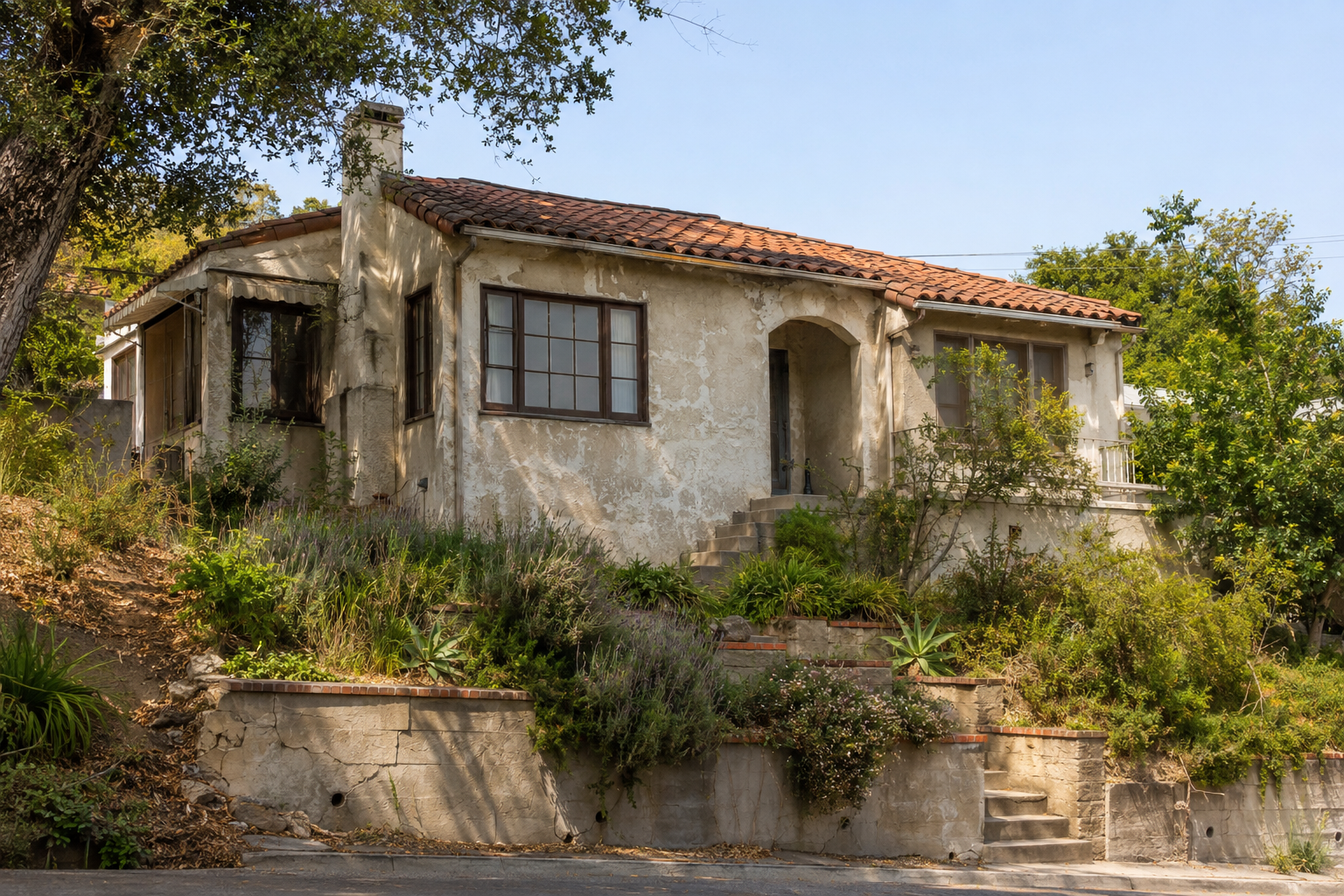
The Home—and a Life—Evolved.
Before the first nail was hammered into a wall, the buyer married. He and his wife then undertook the long project of repairing, remodeling, and transforming the home together.
The ideas and concepts his teacher taught — Individual Evolution remained his. It had inspired him to buy a house, even though he had not considered himself a buyer the day before. But the work of making that house into a home became part of their shared life.
There was no quick renovation.
The house had ongoing structural problems that had to be understood and resolved. At one point, a neighbor asserted a right of ingress and egress near the front yard, creating another potentially serious complication. That issue also had to be addressed and ultimately was resolved.
Then there was the continuing question of money.
They could not simply write a large check and transform everything at once. Work had to be completed in stages as their circumstances allowed. As his career advanced and their resources grew, they were able to take on more of the house.
Years passed. Repairs were made, problems were solved, and increasingly ambitious improvements became possible. A home with potential gradually became the home they had learned to envision together.
Eventually, it looked as though it belonged in Architectural Digest.
We know this story so well because our relationship did not end when the purchase closed. Over the years, our client and his wife became friends, and we had the privilege of watching both their lives and the house take shape. We saw the difficulties they confronted, the improvements they made, and the remarkable home that gradually emerged from that unlikely beginning.
What the Finished Rooms Couldn’t Show.
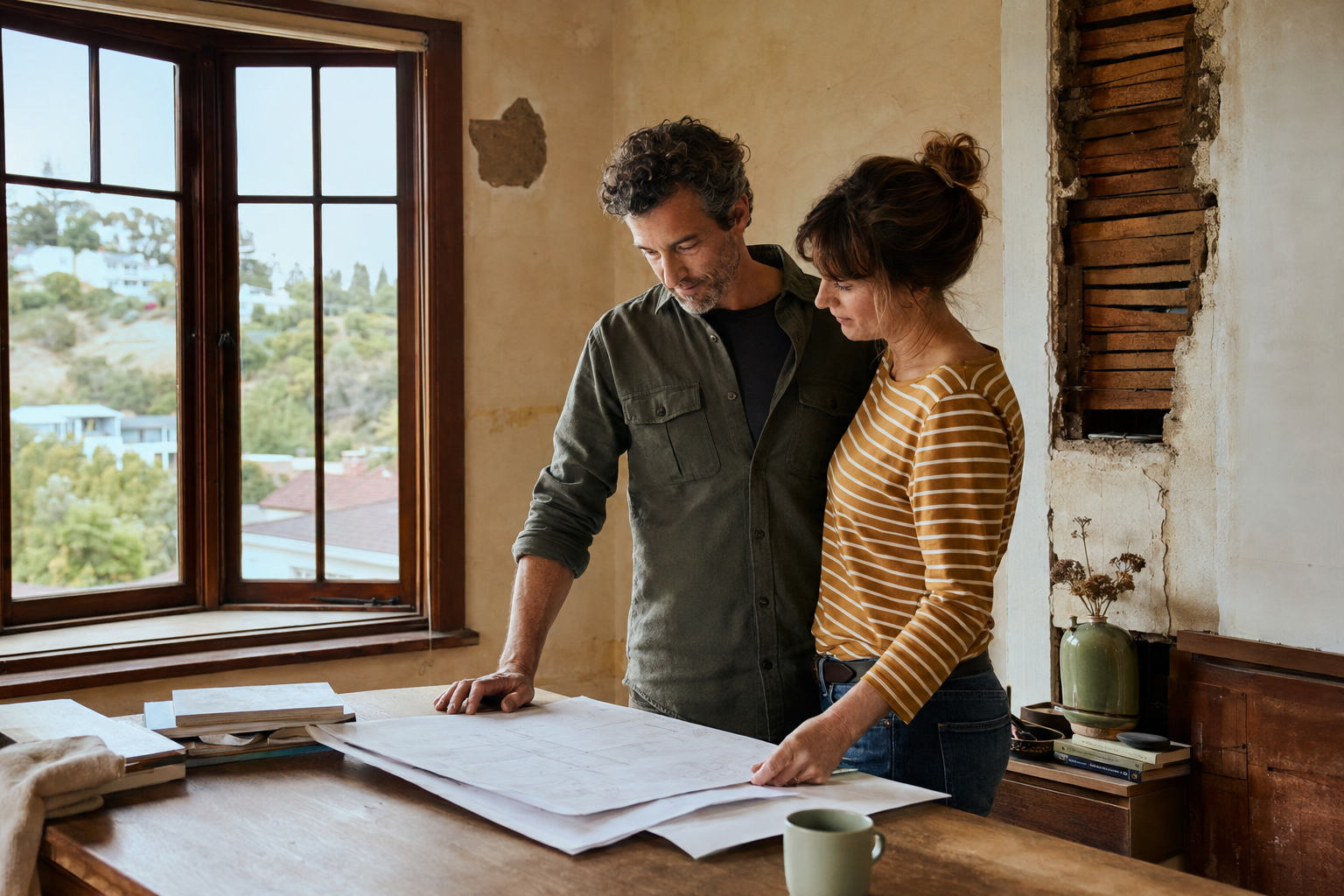
Anyone entering the completed home would have seen the beauty of the result. They would not have seen the home with potential that the couple had first recognized—or all the years inside it.
They could not see the house as it looked when its owner had little money and limited credit. They could not see the structural problems, the disputed access near the front yard or the improvements that had to wait. Nor could they see the marriage, the growing career and the shared confidence that developed while the house was changing.
Many homeowners understand this without needing it explained.
The home they live in today may bear little resemblance to the one they first entered. Rooms change as lives change. Work that once seemed impossible becomes possible. What begins as a list of repairs gradually becomes something more personal—a record of the people who lived there and what they created together.
Buyers can recognize the same possibility from the other side. Sometimes a home with potential is not a finished version of someone else’s life. It is one that leaves enough room for their own life to unfold. It is the one that leaves enough room for their own life to unfold. It’s a home with potential.
That does not mean every neglected house is an opportunity or every obstacle should be accepted. This particular house required an unusual combination of patience, imagination, and circumstances. What mattered was that it found the people for whom the work itself had meaning.
The Chance to Begin.
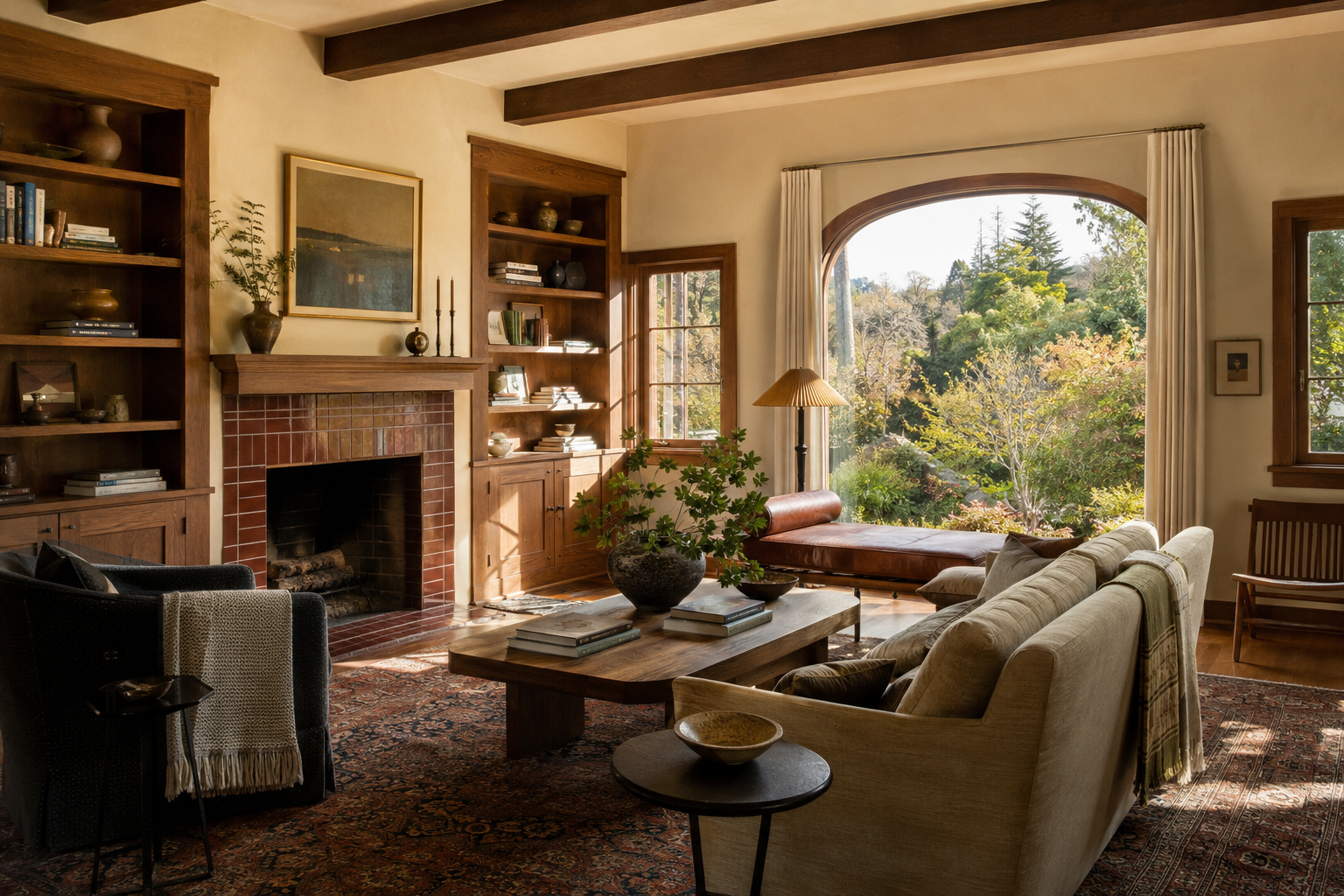
The man who had not been a homebuyer the day before did not purchase a finished dream. He purchased the chance to begin one.
That home with potential gave him something no finished house could have offered: the opportunity to discover what he—and later, what they—could create.
The original impulse belonged to him and to the ideas of Individual Evolution that had helped him recognize it. After he married, the house became something he and his wife shaped together.
Over the years, the project satisfied the needs his teacher had recognized. It gave him something to create and learn from, but it also gave the couple something larger: a home that evolved as their own lives did.
Perhaps that is why certain houses mean so much to us. Their value is not confined to what can be photographed at the end. It is also found in everything that happened along the way.
Stories like this are one reason real estate has never seemed to us simply a matter of matching people with bedrooms, bathrooms, and price ranges. Sometimes the most important part of the work is recognizing a possibility that is easy to miss—and understanding whether it fits the people standing in front of it.
If you are looking for a home with potential, or wondering what another buyer might recognize in the home you have gradually created, call or text Hem-young deFazio. With decades of experience, nearly 700 homes sold and street-level knowledge of Greater Pasadena, she can help you see both the house as it is and what it might become.