

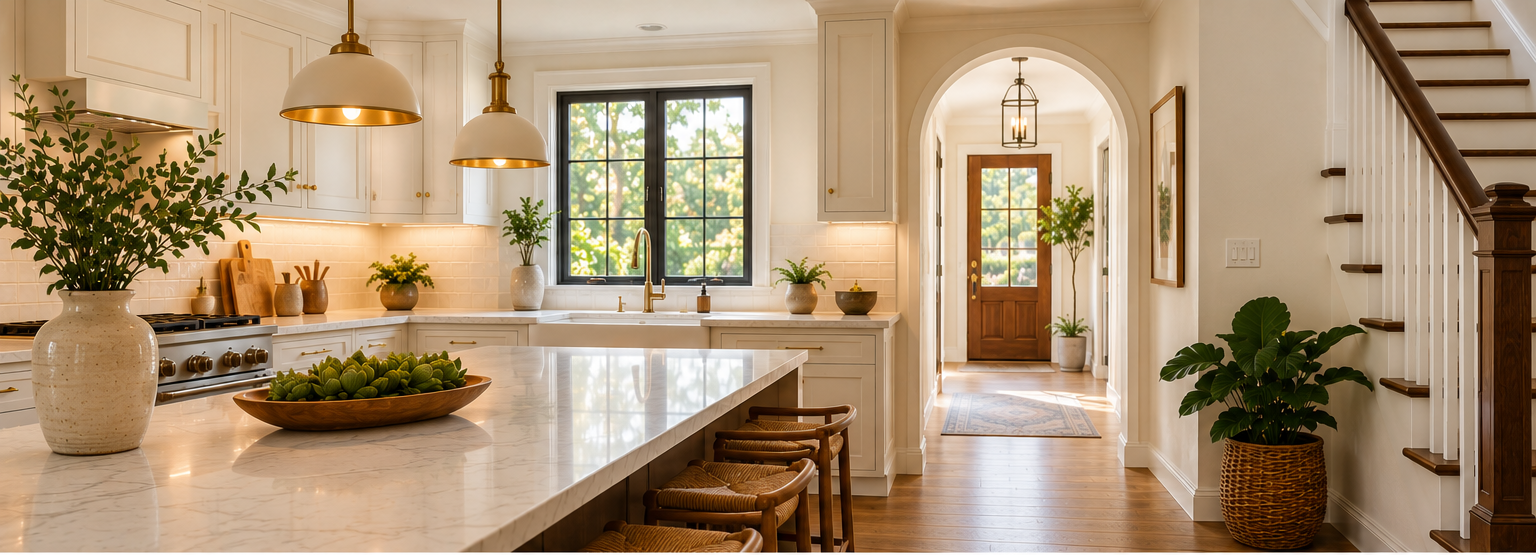
You may not be planning to sell your home. You may not be planning to buy one either. But here is a useful question: what would buyers notice first if they walked through your home today?
Most homeowners think about the obvious things first: the kitchen, the paint, the flooring, the yard, the light, maybe the front door. Those things matter. First impressions are real. But the first impression is not always the full impression.
The things smart buyers notice are useful not only to active buyers. They are useful to homeowners, future sellers, family members helping someone make a decision, and anyone who wants to understand what really affects a home’s value.
Fresh paint may catch the eye. New counters may photograph beautifully. Updated lighting may make a room feel instantly brighter. But buyers often sense more than the surface. They notice whether a home feels cared for, practical, well-planned, and worth trusting.
That matters in Greater Pasadena, where many homes have character, age, additions, older systems, hillside conditions, and block-by-block differences that are not always obvious during a quick visit.
Here are seven things smart buyers notice beyond cosmetic updates.
1. Whether the Work Looks Thoughtful or Rushed.
A home can look updated without being updated well.
That is why smart buyers notice the details. Are the cabinets aligned? Do the drawers close properly? Are the flooring transitions clean? Is the tile work even? Do the doors still latch? Are outlets, switches, and light fixtures placed sensibly?
None of these details has to be perfect. Homes are not museum exhibits with plumbing. But sloppy finish work can be a clue. If the visible work feels rushed, buyers may wonder how carefully the less visible work was handled.
A pretty room can still tell a practical story.
2. The Condition of the Big-Ticket Systems.
Cosmetic updates can be relatively inexpensive compared with the systems that keep a home working. A new vanity is nice. A tired sewer line is less glamorous, but it may matter far more.
Smart buyers notice the roof, electrical panel, heating and cooling, plumbing, water heater, drainage, foundation, sewer history, and signs of past repairs. They also pay attention to whether permits, invoices, or disclosures support the improvements being presented.
That does not mean buyers should become alarmists. It means they should become curious.
A home inspection is not just a pass-fail exercise. It is a chance to understand the house. Buyers should use it to learn what needs attention now, what may need attention later, and what is simply normal maintenance for a home of that age.
For a helpful overview of how inspections educate buyers, see the National Association of Realtors consumer guide to home inspections.
3. How the Floor Plan Would Feel on a Normal Tuesday.
Listing photos often show a home at its best. Real life is less carefully fluffed.
So smart buyers notice how the floor plan would function on an ordinary day. Where do groceries land? Is the kitchen connected to the rooms people actually use? Is there a good place for work, guests, pets, or quiet? Does the home support the way people live, or does it only look good from the photographer’s favorite corner?
This is especially important in older Pasadena, South Pasadena, San Marino, La Cañada Flintridge, Altadena, and Sierra Madre homes. Many have charm, and charm is wonderful. But charm does not always mean easy storage, convenient laundry, a practical primary suite, or smooth indoor-outdoor flow.
A good buyer does not just ask, “Is this beautiful?” A good buyer asks, “Can we live well here?”

4. Light, Heat, and Orientation.
Natural light can sell a room before the buyer has even checked the closets.
But smart buyers notice what kind of light they are seeing. Morning light is different from afternoon light. A west-facing room may feel lovely in January and warm in August. A shaded yard may feel peaceful, but it may also affect gardening, outdoor dining, or future solar plans.
Buyers should notice window placement, privacy, tree coverage, glare, shade, and whether the best room in the house is only at its best for one hour a day.
The sun is a talented marketer. It knows its angles.

5. The Block, Not Just the House.
A beautiful house can make buyers forget to study the street. That is a mistake.
Smart buyers notice traffic, parking, nearby uses, school pickup patterns, freeway sound, hillside access, canyon winds, privacy, walkability, and how the block feels at different times of day. There is no single right answer. Some buyers want a lively, walkable location. Others want quiet and privacy. Some want proximity to shops and restaurants. Others want distance from anything that feels busy.
The point is not to judge the block in the abstract. The point is to ask whether the block fits real life. A home’s finishes can be changed. The block comes with the keys.
For a current look at how local context can shape buyer and seller decisions, see our Pasadena housing market June 10 update.
6. Signs of Deferred Maintenance.
Deferred maintenance rarely enters the room with a trumpet. It usually whispers.
Fogged windows. Peeling exterior paint. Old caulking. Rusted gates. Cracked hardscape. Gutters that look ignored. Water stains under sinks. Landscaping that slopes toward the house. A garage that smells damp. A fence holding itself together through optimism and one heroic nail.
One item may not mean much. A pattern means more. Smart buyers notice whether the home seems consistently cared for or recently polished for the market. That distinction can affect repair expectations, inspection strategy, and the way a buyer thinks about price.
A home can be freshly prepared for sale and still have a maintenance story underneath.

7. The Difference Between “Move-In Ready” and “No Work Needed”.
This may be the most useful distinction of all. “Move-in ready” usually means the home is clean, functional, and livable. It does not mean the roof is new, the plumbing is perfect, the electrical system is modern, the drainage is ideal, or the buyer will never spend another dollar after closing.
Smart buyers notice that every home has a future maintenance curve. The goal is not to find a flawless property. The goal is to understand the property well enough to make a smart decision. What is urgent? What is optional? What is normal for the home’s age? What should be reflected in the offer? What can wait? That is where buyer strategy matters.
Cosmetic updates can make a home more appealing. They can also make it easier to overlook the questions that deserve attention. For sellers, this is just as important. The best preparation is not always the flashiest improvement. Sometimes it is the repair, disclosure, cleaning, documentation, or pricing strategy that gives buyers more confidence.
For more on preparing a home strategically before it reaches the open market, see The Power of Pre-Market Positioning.
Most people are not thinking about real estate every day. But almost everyone understands the pull of a beautiful room, a fresh kitchen, or a home that feels good the moment you walk in. That feeling has value. It just should not be the whole evaluation.
Smart buyers notice more than surfaces. They look at quality, systems, floor plan, light, neighborhood context, maintenance patterns, and likely future costs.
For homeowners, that list is worth understanding long before there is a sign in the yard. It points to the details that may influence future pricing, buyer confidence, negotiation strength, and marketability.
In Greater Pasadena, where homes often come with history, character, quirks, and micro-neighborhood differences, that kind of careful attention can make the difference between being charmed and being prepared.
A beautiful home is wonderful. A beautiful home that has been thoughtfully evaluated is better.
Want to know what buyers would probably notice first about your home?
Text or call Hem-young deFazio at 626-825-5599 and ask for a quick buyer ’s-eye read. She can help you spot the details that may shape value, confidence, and future marketability long before you are under pressure to decide.
Even one clear observation can help you decide what to fix, what to leave alone, and what may matter more than the cosmetic updates.